Friday, March 27, 2009

Rambo Solo

I went to see this on Wednesday with Performance Club and think that it was the first thing I've attended with the group that I didn't enjoy. It's not that I hated it or had a particularly negative reaction to it . . . I just found it frequently tedious. At first I thought that the fact that I've never seen Rambo nor have I read the novel, First Blood, upon which it's based might be what prevented me from being more actively engaged. But it turned out that many people were equally unfamiliar with the source material but enjoyed Rambo Solo much more than I did. It might have been partially that I was uncomfortable. We were all sitting on this shag carpet with cushions and unless you were sitting against the wall--which I wasn't--there was nothing to lean against. By the end of the show I was fairly cranky about that.  But at the same time, some of the parts where I was most bored were toward the beginning, before I was all that uncomfortable. 

I think that sometimes it's hard to say why you're bored by something that other people enjoyed. I just had trouble getting into the story and for quite some time felt like I wasn't interested in having it recounted to me. With books I'm pretty comfortable saying that something--however great it may be--just isn't for me. With performance I'm often much more anxious about doing that; I feel as if I'm just missing something or being a lazy viewer. But in this case I think it really is just that the show wasn't my cup of tea and I feel pretty much OK about saying that. 

I'm not saying that the show doesn't have value for me.  There were moments I loved, particularly in the way Zachary Oberzan used his apartment as the setting for the story. There was a very childlike sense of play in his crawling under the futon or pretending the loft bed was a cliff (not to mention throwing M & Ms). In a sense he seemed to be transposing the make-believe games of childhood into an adult setting where they are no longer so normal and expected and where willing co-conspirators are thin on the ground. I haven't gone crawling around on my floor for any purpose other than cleaning it in years, but watching the show reminded me how fun that had been when I was a kid.

I'm also much more interested in Rambo Solo in retrospect than I was while actually experiencing it. As the retelling of the story came to its climax, I became more engaged. I grew interested in Rambo Solo as a portrait of an obsession and I actually wanted to know how it would end, since I didn't already know the story. It's also a testament to the way in which books can influence us. How they can get under our skins and into our heads. Even when they're not very good books. Or at least not of any particular literary value. But by the point when I actually started to be interested in these things my tailbone was killing me and I didn't feel like the payoff was enough for my prior boredom. 

The way I felt was far from universal though, and to read the interesting-as-always Performance Club conversation go here

Also over on the WNYC blog: a post about The Wooster Group's La Didone where the comment thread has focused in part on the use of technology in live performance. I haven't been able to get to the show--much to my disappointment since I thought it sounded pretty awesome--but I've been following the discussion closely as these multimedia, technology embracing performances are something I'm kind of conflicted about. 

Tuesday, March 24, 2009

Bits and Pieces

I just now got around to watching the series finale of Battlestar Galactica and it kind of sucked, huh? I mean, talk about preachy and unbelievable. Which is a shame given that the series, generally speaking, was neither of those things. At least insofar as a sci fi series ever seems plausible, Battlestar Galactica did because it featured great, complex characters who made credible choices. Until they didn't in the end. I mean, it's not totally surprising that the finale was anticlimactic because this season in general has been pretty uneven, I think, but it's still disappointing.

I've read a few thoughtful and interesting reviews of Jonathan Littell's The Kindly Ones--Daniel Mendelsohn's for The New York Review of Books and Garth Risk Hallberg's at The Millions were particularly good--and yet for all that I'm interested in reading about the book, I find that I have no interest in actually reading it. It's something that happens to me fairly frequently lately.

One book I do want to read is Greg Ames's soon to be published Buffalo Lockjaw. I'm not at all convinced I'll like it, but I'll read it anyway because it's set in Buffalo. And because the cover is really pretty perfect--if slightly cliche--for a book that takes place there. The beer and the font keep the whole snow scene from looking too quiet or classy. Neither of those are very good reasons to read a book that otherwise wouldn't really appeal to me, so we'll see how this goes.


Wednesday, March 18, 2009

My Grandfather

I was going to post about books today, but my grandfather died this morning and it seems appropriate to write about that instead. It wasn't terribly surprising as he was both old and unhealthy and I'm sure it must be awful to be blindsided by death so I'm grateful for that, particularly for my grandmother's sake. But, of course, it's still sad.

The last time I saw my grandfather I had gone out to my grandparents' apartment in Queens for the night. It was during what was the low point in my whole bed bug ordeal. I wasn't really eating and I'd go to sleep by 8:30 or 9 only to wake up at 4 in the morning still horribly tired. And returning to my apartment after work pretty much made me cry. Every day. (Yeah, I didn't deal with that so well. I am definitely not an example of how to handle a particularly stubborn bed bug infestation in an emotionally healthy manner.) Anyway, I was treated for bed bugs late in the day and my apartment was just a wreck. I had to be out for three hours because of the pesticides and the idea of coming back in fairly late in the evening and putting it all back together so I could go to bed was too much to bear. So I put some money and my metrocard in a ziploc bag with a toothbrush and a book that I knew hadn't been exposed to the bugs, changed into freshly laundered and therefor bedbug free clothes, and headed out to Queens. 

My grandmother was just getting over being ill but had dinner ready and over the first real meal I'd eaten in a couple weeks my grandfather told me about the time he'd had "bedbugs." Apparently, during World War II he'd taken a lovely blanket from a dead German soldier. And this would have been great. What luck! But the blanket turned out to be infested with bedbugs. Who migrated over and set up residence in his chest hair. Until he got rid of them by pouring a gallon of gasoline over himself. Now, given that bedbugs don't live on people, I pretty sure what was living in his chest hair was not bedbugs. But a little bit of perspective goes a long way. 

I slept on their couch that night and the next morning my grandfather made me eggs and bacon for breakfast. Everyone in the family always loved when my grandfather made breakfast. My grandparents took such good care of me that day. I'd felt so alone standing in my chemical-filled mess of an apartment, and going to stay with them for the night reminded me of how many people I have in my life who love me and are there for me at a time when I needed to remember that.  So I've been thinking about that a lot today. 

There are so many other things as well . . . all the little and big things that make up a life. But that seems like enough for tonight. 

Thursday, March 12, 2009

Tuesday, March 10, 2009

Chautauqua!

This past Friday I went to see Chautauqua! with Performance Club. I enjoyed it quite a bit. Others did not. There's a lot of discussion going on over at Claudia's discussion post on the WNYC blog. All of it far more interesting than what I could come up with on my own to post here.

I will say that I think my unfamiliarity with downtown performance--and really with performance in general--definitely causes me to miss things but probably also, at times, allows me to enjoy things that people who've seen more don't because it's still all new to me. It's been a lot of fun to discover things that are new to me.

Sunday, March 08, 2009

Growth Report

It's a good thing spring is on its way. Winter is hard on my aloe plants, which always look a bit the worse for the wear after months inside. They're happier out on the balcony. And both my bamboo plants are looking a bit raggedy: one because the cat decided to eat off its leaves and the other for reasons unknown. But at least one of my plants is doing surprisingly well. Back in December I mentioned that I had acquired a cutting from my sister's Rat Tail cactus and didn't know how it was going to do. At the time it looked like this:
Well apparently my form of benevolent neglect is right up its alley, because it's at least doubled in size.

Hey, it's the little things, right?

Saturday, March 07, 2009

Such a Long Journey

This wasn't entirely unlike the experience of reading White Tiger in that I was consistently engaged, and I actively enjoyed reading the book, yet at the end I was left feeling like the book was, well, just a book. That's probably not the clearest description. What I mean is that I feel like the best fiction has a life outside the pages it is printed on. It doesn't just capture your interest; it makes the world it describes feel real and immediate. I'm not saying that all the books that do this or great, nor am I saying that the same books will work for everybody, but I do think the feeling I'm talking about is an important feature of the books I love best.

So at first I thought that my problem with Such a Long Journey was that I was intellectually engaged but not emotionally engaged, and was privileging the latter over the former. That's probably true to an extent. But the more I consider it the more I think that the real problem lies elsewhere. It seems to me that Mistry undermines the many good things he is doing with his heavy-handed symbolism. His characters have to do double duty as people whose actions evolve naturally and people whose actions are so rife with symbolism that they become weighted down. I want them to be human beings and I want the things that happen to feel like they happen not because they have some preordained meaning but because this is the life the characters are leading. But Mistry forces his characters and events to be more than that in a way that is so subtlety free that it makes them less than human even as it imbues them with meaning. And I spent time thinking about the choices of the author instead of immersed in the world of the book. Something that, for me, is always at least a bit of a disappointment.

Wednesday, March 04, 2009

Founding Choreographers II and Short Stories

In the past couple weeks I went to a couple of programs at the New York City Ballet, the first consisting of Ballo della Regina, Davidsbündlertänze, and Glass Pieces and the second consisting of Swan Lake, The Steadfast Tin Soldier, Romeo and Juliet, and Slaughter on Tenth Avenue. So no more Vienna, happily. I'm not sure that I was in the mood for any more of that.

I was particularly interested in seeing Ballo della Regina again because although I've seen it before it's always been with ABT on the smaller City Center stage. It was a pleasure to see it with more room to spread out. And Davidsbündlertänze was beautiful although something I need to see again while Glass Pieces was so energetic and felt so much, for all it's Egyptian whatever, like a ballet born from New York. 

I think though, that the program was something that would have been more enjoyable from, well, somewhere other than the cheap seats. It doesn't normally bother me--hey, you get used to your spot--but for this particular program I think the lower angle would have been nice. Partly because I would have liked to see Davidsbündlertänze from closer and partially because I think it would have made the silhouette effect in Glass Pieces nicer. Also, I really need to find my little opera glasses. They're in a bag somewhere in my apartment (much like most of my possessions) but I certainly have no idea where.

I enjoyed the Short Stories program rather less for the most part. I like Maria Kowroski fine, but didn't particularly love her as Odette and I didn't like the corps that much either for all that the choreography they've been given isn't the problem. The way they used their arms felt sort of perfunctory to me and didn't quite create that poetic feeling that Swan Lake seems to call for. And then you've got The Steadfast Tin Soldier which is a nice little bit of fluff and the Romeo and Juliet pas de deux, which was bland through no fault of the dancers. I was glad I went though, because Slaughter on Tenth Avenue was a lot of fun. I'd never Robert Fairchild dance before that I can recall but I thought he was great tapping away. And I'm always happy to see Sara Mearns who I think is wonderful (not exactly a controversial opinion there). I normally think of her as being the perfect dancer for romantic roles and parts that call for a smooth, flowing quality of movement, so Slaughter isn't really something I would expect her in. Yet she was fantastic in it. 

Speaking of dancers doing well in unexpected things, it's something that Macaulay touched on briefly in his season wrap-up of NYCB. But it's mostly other things he wrote that are stirring up the discussion. (A few links to commentary about it:  Turned InSwan Lake Samba Girl, Dancing Perfectly Free.)I don't necessarily disagree with his comments about several of the dancers--in fact I agree with most of them--but I do wish that he'd used the space to write about things he hasn't written much about previously, rather than returning to that well again. Anyone who reads the dance criticism in the New York Times regularly knows how he feels about those dancers. I'd rather not be bored. 


Sunday, March 01, 2009

A Letter

Dear Sabres,

That was a lousy, pathetic excuse for a hockey game. I paid $70 to witness that shit in person and I hope you're properly ashamed that anyone would have wasted their money on watching that. I may have had fun tonight but it was no thanks to you. (Lalime, you're excused. You were fine and it's not your fault the team clearly loves playing like absolute trash in front of you.) 

I mean, the Islanders are the worst team in the league for a reason. And tonight? They played like the Islanders. And yet you were shut out. If I was that shitty at my job I wouldn't have a job. I'm just saying. 

All the best,
Meg

Sunday, February 22, 2009

Waltz with Bashir

I went to the Lincoln Center Theater early in the evening on Wednesday, having taken a vacation day since I've got some left over from last year, intending to see The Class. But since the times were inconvenient, I wound up going to Waltz with Bashir instead. It had been raining and I've worn through the soles of my shoes so I sat there cold in the thankfully-only-part-way-full theater in my wet socks, eating a bucket of popcorn and using my coat as a blanket. 

I hadn't been totally sure I wanted to see the movie because I haven't been feeling totally up to seeing depressing things lately. But I'm so glad I saw it, and in the theater. It's an oddly beautiful movie, not just about war but also about the nature of memory and history. And it's so difficult to watch but at the same time never feels like a chore.  

I think that the ways in which we construct our own histories--both consciously and unconsciously--are fascinating. History is most interesting when we consider it as a narrative that we construct. And that is the framework within which Waltz with Bashir plays out. The protagonist is trying to reconstruct his own past using the faulty memories of his compatriots, and in the process shows us the tragedy of the 1982 Lebanon War. As a story told in dreamscapes and recollections it has a surreal air, and yet it always feels like you're seeing something truthful. That truth, though, is a personal truth, the tragedy one of individuals as well as nations, and the film acknowledges the importance of that at the same time as addressing the broader subject of war and how people forget and remember, how they lie to themselves and others. 

The only thing I was unsure of was the sudden switch from animation to live action newsreel footage. It was as if the filmmaker was trying to remind us that this was something that actually happened and not a work of fiction. But I don't think it ever felt like fiction in the first place. And I don't think it was any less truthful because it was drawn not filmed. It felt like we were being provided with proof--see, this was awful, this was real--but I think that with a work of art so consistent in its aesthetic and so emotionally engaging,  we don't actually need any proof to believe in it. 

Monday, February 16, 2009

The Winter's Tale

I'm not really sure what the thinking behind The Bridge Project's production of The Winter's Tale was. Let's solve this bifurcated play by making it completely schizophrenic? I can understand the desire to move Shakespeare's plays forward in time, but I'm not sure it's so effective when you have a classical setting complete with a statue that comes to life a la Galatea. And then to take the second act, different enough as is, and insert a folk-singing, anachronistic Ethan Hawke among our frolicking shepherds and nobility in disguise the former of whom perform bawdy dances with balloons? It's like Mendes looked at the play and figured, "Well screw it. It's not exactly Shakespeare's best work so why even bother trying to create a cohesive theatrical experience?"

If that's the case, I don't entirely disagree. It's definitely not one of Shakespeare's masterpieces. In fact, it's not really that good a play at all. You might as well try to do something with it. I'm just saying, maybe pick a thing instead of doing all different things and making it seem even less like one piece than it already does. 

Saturday, February 14, 2009

Cookies

I started this entry almost a week ago and I'm only now finishing it. I did mean to be blogging this past week but instead I decided that, now that the series is almost over, it was high time I started watching Battlestar Galactica. So that's how I've been spending all my spare time. A girl has got to have priorities. (Just not necessarily good ones. [Not that watching Battlestar Galactica is a bad thing to do. But it would be a good thing to take breaks.]) Anyway...

My mother baked with my sister and me all the time when we were little but our repertoire was pretty limited. We mostly made tollhouse chocolate chip cookies, apple pie, rugelach, and gingersnaps. Which are all excellent things to make, really. But I think of two of those types of cookies as seasonal to begin with and I've never really enjoyed making cookies, and I'd rather have pie or ice cream, so I haven't really baked a lot of them.

Still, the little section of the office where my cubicle is located was having a cookie day Monday. Which is how I ended up searching the fantastic Smitten Kitchen for cookie recipes. I wound up making Dorie Greenspan's World Peace Cookies and Green Tea Shortbread cookies (minus the white chocolate ganache because I don't care what it's supposed to be complimenting, I don't like white chocolate). The World Peace Cookies were fabulous. The Green Tea cookies were...fine.

Normally February would seem like a great time for baking. The only problem is my apartment management and I have very different ideas on what constitutes a livable temperature. Combine that with the run of warm weather we had and I'd like it to be a good 15 degrees cooler than it is. When the oven was on for awhile it got up around 87 in the kitchen. So that made things a little less fun than they otherwise would have been. Oh well.

The dough for the World Peace Cookies was a cinch to make. And it only requires ingredients I generally have around the apartment anyway. I love it when I can bake without going shopping. Also I'm trying to save money these days so the fact that the recipe doesn't call for anything fancy or expensive is a definite bonus. I mean I'm sure you can use expensive, fancy chocolate and the cookies turn out glorious but I used fairly middle-of-the-road stuff and the cookies still tasted awfully good.

Making slice-and-bake cookies from scratch is a new thing for me and while forming the logs was easy, it turns out that I have no idea how big an inch-and-a-half is. I made these cookies again today and used a measuring tape this time around and as a result I can say with some confidence that the first time I made these the logs were easily over two inches wide. Oops. To compensate and make sure I had enough cookies to bring to work, I cut them a bit thinner than the half-inch wide they were supposed to be. So the cookies ended up being broader and flatter than they were meant to be. But as long as things still taste good I just figure that mistakes aren't that big a deal. I do have to admit though, that I like them best at their prescribed size and washed down with milk. Like that, they're about as satisfying a cookie experience as I can imagine.

The Green Tea cookie dough was also easy to make but did require me to go out and buy matcha. And since I couldn't find the unsweetened kind the recipe called for I ended up cutting back on the powdered sugar in the recipe just a tiny bit to compensate. It's not an overly sweet cookie, which is good since I don't have all that much of a sweet tooth.

I have to admit that I was a little concerned also, by the rather unappetizing color of the dough. And it was a fucking pain in the ass to roll out. First it cracked and then it stuck horribly. I ended up rolling it out between a couple sheets of plastic wrap. And once they were baked the cookies were a much more appealing green than the dough had been. They're light and crisp with just a delicate taste of green tea. Not so much as to be overwhelming but distinctly noticeable nevertheless. Now if only I liked shortbread better.


Saturday, February 07, 2009

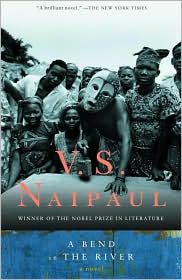
A Bend in the River

Naipaul is, for me, a particularly good example of why it's not necessarily conducive to your reading enjoyment to know too much about an author. (My less literary example being Orson Scott Card: I loved Ender's Game in middle school. Now I wouldn't be able to read one of his books.) The thing is, I think Naipaul is a fairly brilliant writer--which isn't to say I could get through The Enigma of Arrival--but I have a difficult time separating his fiction from what I know about him. I don't really know how one does that. 

I mean, how do you read a book set in Africa and not let the knowledge that the author is a racist alter the way you read it? I shouldn't put it that way, really. I don't think that's desirable. But I also don't think that you want that knowledge to occlude your ability to appreciate all the genuinely good things about a book. And for me it does. 

Sunday, February 01, 2009

On Books and Other Miscellany

With all the eulogizing of Updike this week I've been forced to think about the fact that I've only read half of one of his books (Rabbit, Run, assigned reading for a 20th century American lit course) and, quite frankly, decided that was more than enough. How convenient then, that there's a recent post on The Millions about glaring gaps in the reading of the contributors. The most interesting part of that post to me--and, seemingly, to a number of critical commentors--is this:
When it comes to playing readerly "I Never," there are rather a lot of burly man-authors, chiefly twentieth-century man-authors, whose work I've never read. Hemingway (other than the 4 page story "Hills Like White Elephants"), Kerouac (a bit of his poetry; enough of On the Road), Roth, Updike, Kesey, Heller, Burroughs, Cormac McCarthy, Vonnegut, Pynchon, Moody, and Foster Wallace all fall into the category of authors I haven't read. Many of them fall also into the category of authors I have no interest in reading. Perhaps it is that I intuit (or imagine - not having read them, it is hard to say) a masculinist, vaguely misogynist aura that has put me off; Or, as in the cases of Pynchon and Foster Wallace, a virtuousic formal complexity or grandiose heft, that I also associate with the masculine artistic mind. [ . . . ] Well-founded, my prejudices certainly are not, but I do not apologize for them or intend to renounce them.
Well, I've read at least a bit of a bunch of those writers over the years--Roth (The Plot Against America), Vonnegut (Breakfast of Champions), Pynchon (Crying of Lot 49 aka the short one), Kesey (One Flew Over the Cuckoo's Nest), Heller (first 70 or so pages of Catch-22), Kerouac (On the Road)--and I can't say grouping them together makes a whole lot of sense to me. But despite that, I tend to think, good for her. If reading something doesn't give you pleasure on some level, why bother? If the idea of reading a book doesn't particularly interest you why pick it up when there are so many other good books that do interest you? 

Personally, I tend to at least try to read everything and then just give up part way through if I'm disinterested. Which is usually pretty quickly. I never even made it to the crime in Crime and Punishment. And I recently told my cousin I would read A Confederacy of Dunces but I've stalled out a couple chapters in and really might as well return it to the library. It might actually serve me better to just skip these books I don't have much interest in reading in the first place and am only looking at because of some misguided idea that I should read them. Food for thought. 

Various notes:
According to the New York Times there's going to be a new advertising campaign aimed at getting locals to go to more Broadway shows. My suggestion? Find a way to lower the ticket prices. Significantly. I don't know how they should do it--hey, it's not my job to get people to the theater--but they should find a way. Because the prices are just too high. 

I broke a mirror last night. I'm not superstitious, but I was put out since it's my roommate's mirror.  I've never liked it much at all, but I still feel guilty. I've been such a klutz lately. In the last month I've broken two glasses and now this.

Somehow I ended up with plans to go to my grandparents house this evening to watch the Super Bowl with family. I've watched approximately 0 minutes of football this year, but I read Margee's Girls Guide to Choosing Your Super Bowl Team (Part I, Part II) over at SportSquee, so I figure I'm set. Right? 

Sunday, January 25, 2009

Four Voices @ NYCB

I had planned on going to the ballet Friday and just picking up a ticket when I got there. Then I was so enjoying the book I started on the subway ride to Lincoln Center that I almost turned around and went home so I could keep reading. (I bought the two John Williams books I didn't already own the other day--I figured if I'm googling interviews with him at 4 o'clock in the morning it's probably a sign I should read more of his books--and I just started Augustus.) Anyway, I did end up going because I very much wanted to see Concerto DSCH, but while sitting through the first couple ballets I seriously questioned that decision.

Well, I questioned that decision while not busy thinking about how my hands smelled like bleach and how sad it was to be thinking about that rather than enjoying what I'd paid to see (during Chiaroscuro) or how I really wished I hadn't worn stockings because my left foot was itchy and I couldn't itch it properly (during Papillons). I'm not, as a general rule, opposed to seeing things I dislike, but I found myself feeling a slight bit resentful when it came to these two. I mean it's one thing to see a new piece that isn't good. Or to see something that just isn't to your taste. Or even something that fails in an interesting way. But I'm just baffled as to why these first two ballets were revived: It's not that they're awful, it's just that they're bland and somewhat tedious. And since the audience didn't seem particularly full and the applause was tepid compared to what the other ballets received I can't imagine it was the huge audience demand either. Well, so it goes. I'm sure there are people who enjoyed it far more than I did.

I was glad then, that it was all uphill from there, and particularly that I liked Concerto DSCH as much as I did. I love that the dancers are shown as normal people, in a way; they're doing incredible things but they're not elevated. And while many people have already noted this, it's a treat to watch the community Ratmansky creates on stage. And the dancers look like they're having a great time. Who knows if that's actually the case--not I--but the impression makes it fun for me as a member of the audience. I also enjoyed the variation of tone over the course of the ballet. And getting to see Wendy Whelan who, solely by chance, I haven't seen that much of but always enjoy when I do see her perform. I feel a little Vienna-ed out between the Brahms-Schoenberg Quartet and Vienna Waltzes. The last movement with Sara Mearns and Amar Ramasar was a blast. So the night at least ended on a high note. 


Wednesday, January 21, 2009

The Cherry Orchard

I think BAM's Bridge Project is an interesting one. Not so much because I care about the differing performing styles of British and American actors or anything like that--frankly I don't know enough about acting styles to know what difference it makes--but because it's an opportunity to see good (or in the case of some, like Simon Russell Beale, great) actors in new productions of classic plays. And hopefully some of those productions will be fantastic. 

The Cherry Orchard was more good than fantastic. The performances ranged from good to excellent, but the direction was heavy-handed at times, which really wasn't necessary. The play is from 1904. You don't really have to be particularly knowledgeable about history to realize that the changes that occur in the play are related to much bigger changes down the road. So the overdone foreshadowing seems entirely unnecessary. I also wasn't in love with the set, which didn't really provide a sense of place for the most part. It seemed like it could be anywhere. 

What you end up with is a nice looking production (the costumes, in particular, are gorgeous, although I'll cop to a general fondness for clothes from that era) that's well acted and funny where it's supposed to be funny and tragic in its characters inability to cope with the world as it is. All the boxes have been checked, I guess you could say. And yet in the end it doesn't become transcendent in the way that great theater can. 
  

Monday, January 19, 2009

The Shipment

This was one of the January shows for Claudia LaRocca's Performance Club. It was something I never would have wound up going to on my own. I would have (possibly) read the review in the times, thought oh, that sounds interesting, and then gone back to reorganizing my kitchen cabinets or whatever and never gotten around to actually getting a ticket. I have motivation issues. But knowing that I'll have the opportunity to talk about what I've just seen with other people is exciting and makes attending things so much more fun. 

Last month I was a bit nervous because so many of the people are involved with performance as as more than just a sometime audience member and so very much more knowledgeable than me. But everyone's been so nice and easy to talk with that it was soon clear my worries were misplaced. Instead, I feel like I'm expanding my performance-viewing horizons while learning from other people and having a really good time. So it's basically a win-win-win situation. And on top of that, I've genuinely enjoyed both things I've gone to so far, which certainly isn't necessary, but it a plus.

But about The Shipment. I've been trying to think about what exactly I have to say about it. Or rather, how I can organize my thoughts about it well enough to write about it in a cohesive, worthwhile way. As much as I enjoyed it, I'm still turning it over in my head (a good thing, no?). The cast was wonderful and the show itself definitely made me think about my own preconceived notions of race but also about my own discomfort with talking about race in anything other than a politically correct way. I didn't think everything worked equally well, and I'm not sure how to interpret some things, but other things really intrigued me, particularly in the way Lee raised questions about how our expectations and preconceptions influence media representations of African Americans and vice versa?

The Performance Club post for discussion of The Shipment is here..

Sunday, January 18, 2009

John Williams

For whatever reason I woke up at 3:30 this morning and haven't been able to get back to sleep. Before I gave up on falling asleep again. I started thinking about John Williams. No idea why. I mean, I loved Stoner and I've thought of it frequently since reading it, but nothing about my day brought it particularly to mind. So I turned on the computer and started googling, because I needed something to do with myself and didn't have the energy for either of the books I'm in the middle of. And I found this interview from the early 80s, in which Williams says:
"I write for the reader, more than I write for myself. The reader who puts down ten or twelve bucks for a book—really much more than that now—deserves some respect and consideration. We're arrogant about this, and people are more intelligent than we think they are. The so-called `common reader' is sometimes an 'un-common reader' and can click in and understand and like things more than most of us think they can."
I love that (and several of the other views Williams expresses in the interview). 

I also dug up The New Yorker's 1965 review. It was a very positive review of the book but kind of a terrible piece of literary criticism even making allowances for "Briefly Noted" form. Funny that.


Thursday, January 15, 2009

All Balanchine + Coppelia

Getting myself to the ballet on Saturday was a bit of a comedy of errors. I was planning to head out early so I could buy a ticket and then head over to Barnes & Noble for a bit (I have a gift certificate). Thanks to that plan, while I didn't make it to the bookstore, I did manage to get to Lincoln Center on time.

The problems started when I decided that I wanted to bring Nancy Goldner's Balanchine Variations with me so I could re-read her essay on The Four Temperaments during the subway ride. (As a sidenote, if the world were a perfect place someone would offer Goldner an exorbitant sum of money to write about many more Balanchine ballets, because her book is wonderful but I wish it were three times the length.) Unfortunately, during the bedbug invasion I became thoroughly paranoid about my books getting infested--it does happen!--so I heat treated all of them and put them in ziploc bags. But they don't all fit on my bookshelf to begin with and the bags are slippery so I can't stack them on top of the shelf like I used to. Thus there are piles of books all over the apartment. Unsurprisingly, it took a while to find Goldner's book--behind the kitchen table, shoved up next to the shelf the plants live on. It was in a ziploc with a biography of Henning Kronstam, so I was clearly employing some kind of logic in my bug-addled state.

Anyway, then I went to get on the subway and the F & V weren't running in either direction due to a "police action." So I had to walk a ways to get the D in the--admittedly minimal--snow and while wearing not terribly practical shoes. I eventually got there and got my ticket with just enough time to look over the program before the start so it was all fine.

I'm not sure how I feel about Chaconne. I enjoyed Maria Kowroski--she's such a beautiful dancer--but didn't particularly like Marcovici as her partner. I wanted him to be smoother and more expansive so he would be a better match for her. For the most part though, the ballet just seemed perfectly lovely but no more and no less than that.

The Four Temperaments though, I loved. And to go back to the Goldner book, reading such a clear-eyed exploration of the work is something that's so helpful to a person like me who has very little technical knowledge because it gives me things to look for and focus on. So much writing about ballet is flowery and metaphor-filled and I get that, because dance is hard to describe in writing (I certainly can't do it well), but it doesn't help me much. Goldner's descriptions are so concrete that it's easy for me to know what she's talking about. Here, for example, she writes about the three initial duets:
Whereas the drama in the last four parts resides in its play on emotive qualities, the first part is most dramatic for its play with the academy. The knee, for example, is all but invisible in textbook ballet. It is prominent in The Four Ts from the start, when both of the dancers in the first duet move with one knee on the ground. It's just one step they take, but its slight awkwardness brings what could be a transitional move into high relief. Placing a woman on pointe with a bent knee is even more unorthodox, since the very point of dancing on pointe is to create a streamlined image. Balanchine develops the bent-knee motif as the three duets progress, starting with big ronds de jambe, moving to pirouettes, and finally to pirouettes in which the woman plunks her foot on top of her supporting bent knee.
Well I can understand and appreciate that. It gave me something to look for, and think about, while watching. Later, she writes about the roles of the temperaments themselves. Here too, she's clear without being either fussy or authoritarian. Of Melancholic, she writes:
His main problem is that he can't get anywhere, can't get out of his own body. And when he's not thwarting himself, the ensemble of six women does the job for him.
I like that idea. I liked watching the Melancholic variation and considering the ways in which he is stuck, and incapable of forward progress. It's not that I particularly want someone to tell me what to think about particular ballets. I don't, because that would be boring. But I do like to be given things to think about. That provides me with an entry point of sorts into these non-narrative ballets.

Vienna Waltzes I liked, but I think it would be possible for me to like it more. I thought I would after the first section with Sara Mearns, who is one of my favorite New York City Ballet dancers among those I've seen and seemed perfect for the role. And I enjoyed the second waltz and the polka as well. But the Merry Widow section didn't particularly work for me. And then came the last section, which was thrilling once the ensemble was dancing--although I think the mirrors probably create a more dramatic effect for those below the fourth ring--but not so much before that. The solo sections with Darci Kistler didn't seem fully realized. So there was kind of a dip there for me.

All in all though, it was one of those days when I left the theater happy to have been there and seen the show, which is always a good feeling to have.

I also went to Coppelia (on Tuesday) and it was cute enough--Megan Fairchild makes a perfect little pretend-doll; the peasants are, as is usually the case in ballet, very happy--but I had a headache by the third act and was mostly just ready to go home. (This week has been a long one for me because I've been feeling generally not good.) Teresa Reichlen was beautiful as Dawn. And, in a somewhat related plus, it meant I missed watching the Sabres lose to the Red Wings. That was definitely a good thing.

Monday, January 12, 2009

Pyramus' Latest Obsession

Awhile back, Pyramus decided he no longer liked drinking from his nice, clean water bowl. Instead, what he truly, desperately wanted to do, was drink from the toilet. At first Wendy and I were moderately OK with this, being the sort of people who clean the toilet bowl regularly. But then we decided that the plumbing in our building is not particularly sanitary and cut him off. He hasn't taken kindly to this, and comes running whenever he hears me in the bathroom, in the hopes that he can get himself some toilet water. Failing that though, he has decided that anything must be preferable to the water in his bowl, even warm bath water. 

After nearly taking a swim shortly after this picture was taken, he embarked upon a period of experimentation, eventually deciding that he was more stable if he adopted a wide stance and kept one or both front paws on the ledge of the tub. 
Nevertheless, he had some pretty wet paws by the time he was satisfied.