Showing posts with label musicals. Show all posts

Thursday, April 16, 2009

Beowulf: 1000 Years of Baggage

This was one of the performance club shows this month. I wasn't able to go with the club but I did go on my own. The performance club discussion is here. I started writing this blog post days ago and if I had started now instead I might have written something slightly having read the comments over there. As always, they've given me all kinds of things to think about. But I'm lazy, and my general take on the show hasn't changed, so you're pretty much going to get what I wrote before. (This is what happens when you leave your taxes to the last minute. I did them Tuesday night and was so tired that I fell asleep at about 8:45 yesterday [that's a little sad and maybe shouldn't have been admitted publicly].)

I'm a bit conflicted about this. On the one hand, I thoroughly enjoyed the show. I thought it was fun and funny. On the other hand, I felt like what I was seeing was Beowulf divorced from its context and that this was being put forth as more desirable--less "stifling"--than academic study. The three academics featured throughout the show are basically caricatures. But was it really less stifling? The poem is part of a formulaic Old English literary tradition. And also related to a body of interconnected Scandinavian work that features the same people and places. Does knowing that--being familiar with these traditions--turn the work into a museum piece or does it deepen and strengthen one's appreciation for it? 

In the musical* the story rarely felt full-bodied. It seemed like they didn't necessarily believe in the strength of the source material. The biggest victim of this is Beowulf himself, who is portrayed through much of the show as a musclebound idiot--like the dumb jock in a high school comedy--which seemed to me like a strange choice in part because I don't think the violence is really the most remarkable or noteworthy feature of the poem. I mean, that's kind of a feature of Europe in the early middle ages, no? And shouldn't Beowulf be so much more than that. So it's not so unique to see it represented in literature.When the performance focuses less on the aspects of the story that can be reduced to cartoons--or action figures in this case--it starts doing something interesting and distinct from what you'd find in academia. Instead of attempting to understand Beowulf as it was created, it seems to be addressing the ways in which the story can speak to a modern audience across the years. 

Toward the end of the musical, Beowulf challenges the most straight-laced of the three academics (who up to that point has pretty much been a caricature), saying that she hasn't experienced the kind of violence she's describing, a sword slicing flesh, etc. It's true of course, but it's also true of pretty much everyone who is going to read Beowulf or see a play based on it. These people and their concerns are pretty alien to us; we can't really understand them. And maybe that's the point. Or maybe it's not. Still, it feels at the end like they want to be doing something more serious, but because the show up to that point hasn't really gone below the surface it can't really support the reach for something more significant. 

*They call it a songplay, which I found obnoxious until I realized that "songplay" was kind of a kenning and therefore pretty appropriate to a musical based on Beowulf. So now I find the term tolerable--score one for academia and formal teaching there--but not so much so that I actually want to refer to the work as anything other than a musical.

Monday, April 21, 2008

Love Songs (Les Chansons d'amour)

So, in case people haven't picked up on this, I'm a fan of musicals. Not so much of the big, overwhelming, cheesy sort (see Wicked) but of the smaller scale sort. Not that I never like the big stuff, but sometimes the small ones seem more effective. Les Chansons d'amour isn't a great movie by any means but it is one I thoroughly enjoyed.

To get the criticism out of the way, the movie never quite seems to develop its themes fully--it feels like more could have been done in places and the ending is abrupt--and the subtitles for the songs are sometimes good and sometimes a bit of a disaster. Wendy assures me that the lyrics are decidedly not awkward in French and are, in fact, very good, so blame that one on the translator.

Still, there's more good than bad. The music is a sort of French pop that I enjoy and the actors do a nice job of handling the musical numbers without seeming forced. (No subtitles in the clips on YouTube, unfortunately.)


The family in the movie is a nice change from the dysfunctional families that seem to pervade most movies and the relationships between the family members seemed more true and familiar to me than those in many movies. The story is emotionally involving and I think what the director is aiming at in his examination of love--the ways in which it shifts, the relationships people form to fill different needs--is interesting. And Louis Garrel is delightful. So all in all well worth seeing, I think.

Tuesday, March 25, 2008

Sunday in the Park with George

The first time I saw a musical that used projections to create a backdrop it was absolutely dreadful. I mean the musical itself was dreadful--The Woman in White in London--but the projections were as well. Anyway, I left that show thinking, "Projections are a terrible idea. Stupid new fangled technology." So after seeing Sunday in the Park with George I take it all back. Projections aren't stupid; doing projections badly is stupid. I do think it helps also to be using projections in a musical that centers around the creation of a two-dimensional work. Rather than a gimmick it comes off as an illumination of the subject. It's like the projections allow you to see the world the way the artist is seeing it--as something beautiful and malleable.

The central characters--George of the 19th century and George of the 20th--are men trying to make a connection with the world through the act of looking and creating art from the things they are looking at broken down into the basic components of color and light. As an exploration of an artist and his world the first half is brilliant. The second half, set in the eighties art world seems to me to be rather less interesting, although still well done.

What consistently amazes me about Sondheim is his ability to express complex concepts in song. While I'm admittedly far from an expert on musical theater, I just can't think of anybody who does it better. In response to his mother lamenting the changes she has seen, George sings:
All things are beautiful
Mother
All trees, all towers
Beautiful
That tower-
Beautiful, Mother
See?
A perfect tree

Pretty isn't beautiful, Mother
Pretty is what changes
What the eye arranges
Is what is beautiful
It's the expression of an artistic philosophy in two stanzas. It feels natural and easy when Sondheim does it but it's incredible in it's simplicity. Likewise, Sunday, which closes both acts, has a feeling of completeness and--I don't quite know how to describe it. Regardless, it's wonderfully satisfying. As is the production as a whole.

Tuesday, August 28, 2007

The Drowsy Chaperone

A year and a bit ago, my roommate and I saw the following video and decided that we should really go to see The Drowsy Chaperone (and again, blogger's spellcheck irritates me by telling me I'm spelling something wrong when I most certainly am not) because it looked like a lot of fun.


As it turns out, it was more "some fun" than "a lot of fun." I imagine it would have been more enjoyable with Sutton Foster (Thoroughly Modern Millie was certainly more fun with her than with her replacement) but I still don't think I would have been crazy about the musical. And if I wasn't so tired I'd write more, or promise to write more later, but honestly I don't think it's going to happen.

Friday, June 29, 2007

Spring Awakening

Spring Awakening was the latest in my monthly show-with-grandma series. You may be looking at that picture and thinking, hmm, not something I would want to watch with my grandma, but to be honest it's pretty much old hat by now.

And at this moment I feel that I should take a second to point out that as much as I joke about this particular grandmother on my blog, and as much as she drives me nuts at times, she's a pretty cool lady and I do hope that comes across. In addition to the classes she takes and the shows she goes to, in the next year or so she's going to Egypt, Austria, the Czech Republic, Italy, Mexico, and China. I certainly hope that I'm as active, and leading as interesting a life as she is.

But anyway, the musical. It just won a whole passel of Tonys, of course, though upon seeing it I wish some more of those had gone to Grey Gardens. I've never been wild about rock musicals. I like my cheesy musical music. And I like the good musical music, like Sondheim, even better. If I want to listen to rock, I can put on a cd. And I just didn't find the music that interesting.

That said, I did think it was a very good musical. Although I prefer it when the music actually moves the story along, I though it did a good job of illuminating the emotional state of the characters while being relatively disconnected from the action of the play. And as you couldn't always understand the lyrics, it's probably for the best that the actual narrative wasn't contained within them. The other thing I though it did really well was capture the confusion and over-the-top emotion of adolescence. Interesting, because there were moments when it evoked a certain feeling of nostalgia, but for the most part it left you with a feeling of, oh thank God I got past that mess. Which is how I generally feel about my middle school and high school years so no surprise there. I mean, I had fun, particularly in high school, but I certainly wouldn't want to live them over again. Such drama.

My problem really stems from the fact that I felt like it started out so well, and filled with promise, only to descend by the end into a typical melodrama with a bit of plot that felt entirely too after school special. Now, the play itself (minus music) was written some hundred years ago, so perhaps it was a bolder ending at the time, but now it just feels a bit boring and predictable. But most people seem to love the musical rather more than I do--although merely liking something should hardly be an insult--so here are some clips from the godsend that is YouTube.

"The Bitch of Living" (with cuts to other bits of the musical):


A bit of "My Junk" (after some introductory stuff) on Breakfast with the Arts:


"Touch Me" on the View:


"The Word of Your Body (reprise)" performed by cast members at the Apple store:


The Tony Award medley (a bit of repetition from "The Bitch of Living" in the middle):

Friday, June 01, 2007

110 in the Shade

Haven't been up to much. I went to the Bronx Zoo on Memorial Day which was fun. We got really good pizza at an Italian place near the zoo before going in and, after leaving, picked up 75 cent ices on the way to the subway. Just try to find that in Manhattan.

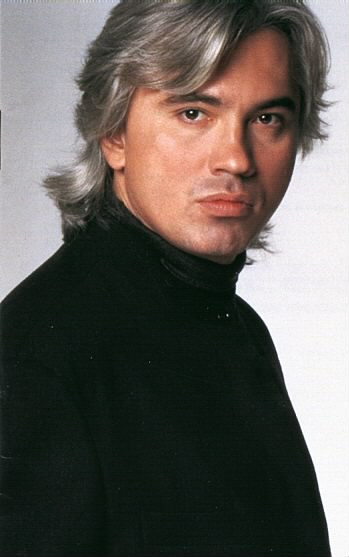
Yesterday I went to see 110 in the Shade with my grandmother. We had dinner at Iguana and I got to hear about how she had to go to the opthamologist soon and it made her very nervous so she was rather wishing she had marijauna. Then we moved on to how she had had seen Dmitri Hvorostovsky sing at a Metropolitan Opera Guild thing and stood not two feet away from him in the elevator. Hvorostovsky is totally my grandma's celebrity crush. Personally I don't see it, but according to La Scena Musicale, "Hvorostovsky is one of nature's physical aristocrats. Those sardonically sensual lips, that trademark mane of silver hair and those hooded Slavic eyes suggesting cruel Tartar ancestry - the man is totally hot and, paradoxically, cold."

Setting aside the fact that the writer should perhaps moonlight as a sub par romance novelist, I just don't get it. Personally, I'm not filled with the sudden desire to tear off that black turtleneck but if it works for some--grandma included--then ok. My grandmother is also charmed by the fact that he sings a song her grandmother used to sing years ago. Ochi Chernye (Dark Eyes), in case anyone was overwhelmed with curiosity. Of course, I suspect my great-great-grandmother sounded just a bit different when singing it.

Then, as she always does, she requested her dessert without the calories. This would be funnier if she wasn't a small thin woman who obviously can afford to eat her molten chocolate cake.

So, anyway, on we went to the musical. And lets be honest, it's a good musical, but everyone's there for Audra McDonald. She didn't win those Tony Awards for nothing. The most interesting thing about this particular production is the colorblind casting. John Cullum played her father (my grandmother happily noted that she saw his Tony-award-winning performance in On the Twentieth Century forty years ago) and because musicals require such a suspension of disbelief anyway, and they're so good, you really don't question it. My only moment of real disbelief came when McDonald's character was told she was plain and I thought, Audra McDonald is so not plain, you twit. The musical itself is good but not great. It's her performance that makes it such a delight.

And of course, because I cry at the drop of a hat, I was sitting there, just before intermission, wiping away tears and wishing I had tissues. Give me songs with lyrics like, "Oh, God, don't let me live and die alone," and I'm an instant mess.

I still say Ebersole should get the Tony this time around though, for her act of ventriloquism in bringing Little Edie back from the dead.